


Lot 1 · Live Luxury Asset Auction · October 29, 2026
The Caryl Chessman Archive
Twelve years on Death Row. Nine execution dates. And a Sacramento attorney who kept everything.
A Witherell TrueCrime film
The case, from the inside.
The case
Nine execution dates. Eight stays.
In the winter of 1948, in the hills above Los Angeles, a man with a red spotlight, posing as police, stalked the lovers’ lanes. The papers named him the Red Light Bandit. On January 23, 1948, police arrested Caryl Chessman, twenty-six years old.
He represented himself. That spring a jury convicted him on seventeen of eighteen counts, among them robbery, kidnapping and sexual assault, and under California’s “Little Lindbergh” law, which made kidnapping with bodily harm a capital crime, he received two death sentences.
Nearly twelve years on Death Row followed, most of them spent fighting his own appeals from cell 2455 at San Quentin. The court reporter had died before transcribing his notes of the trial, and the reconstructed record carried the case to the United States Supreme Court in 1957. Nine times the State of California set a date for his execution. Eight times it was stayed.
- 1 March 28, 1952 Stayed: California Supreme Court
- 2 June 27, 1952 Stayed: Federal court of appeals
- 3 May 14, 1954 Stayed: Marin County Superior Court
- 4 July 30, 1954 Stayed: California Supreme Court
- 5 January 14, 1955 Stayed: U.S. Court of Appeals, Ninth Circuit
- 6 July 15, 1955 Stayed: U.S. Supreme Court, Justice Tom C. Clark
- 7 October 23, 1959 Stayed: U.S. Supreme Court
- 8 February 19, 1960 Reprieved: Governor Edmund G. Brown, 60 days
- 9 May 2, 1960 Executed, San Quentin, 10:03 a.m.
He also wrote. Cell 2455, Death Row, published in 1954, sold some half a million copies in the United States, was translated widely, and became a Columbia picture the next year. Trial by Ordeal, The Face of Justice and The Kid Was a Killer followed. The prison tried to stop the writing, and later manuscripts were smuggled out.
By 1960 the case had become a cause around the world. Eleanor Roosevelt, Aldous Huxley, Ray Bradbury, Norman Mailer, Robert Frost, Marlon Brando and Billy Graham were among those who urged clemency, and a petition from Brazil reportedly carried more than two and a half million signatures. On February 19, 1960, about ten hours before an execution date, Governor Pat Brown granted a sixty-day reprieve.
May 2, 1960 · San Francisco
The last stay
- In the chambers of U.S. District Judge Louis E. Goodman, George T. Davis and Rosalie Asher ask for one more stay.
- The judge grants an hour.
- His secretary misdials the prison.
- By the time the call connects, it is too late.
Caryl Chessman was executed at San Quentin at 10:03 a.m.
The attorney
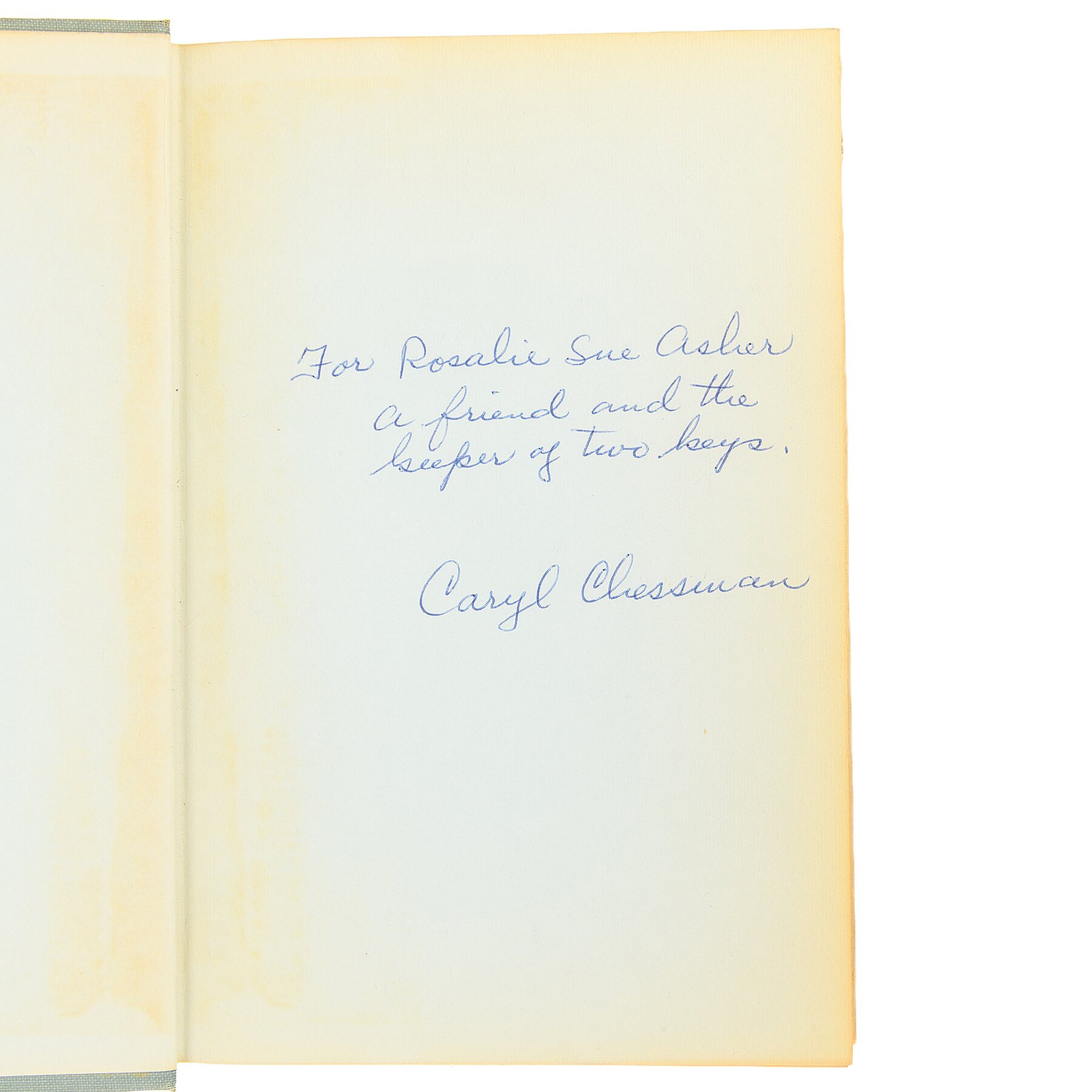
“For Rosalie Sue Asher, a friend and the keeper of two keys.”
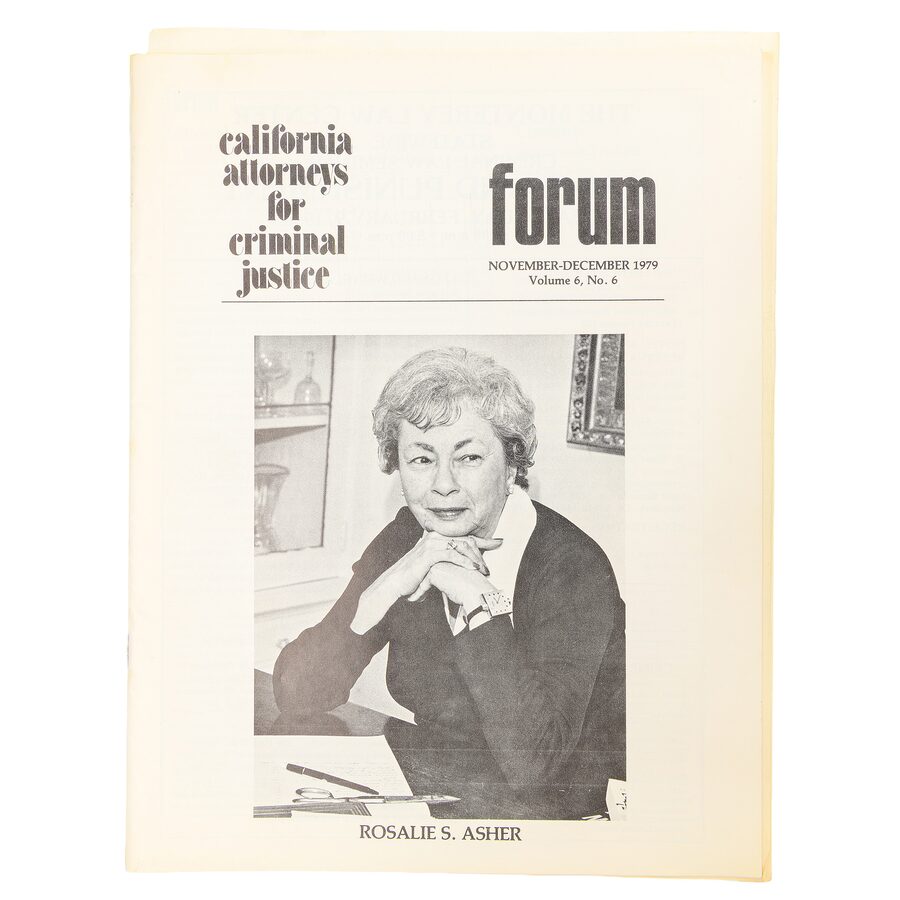
Rosalie S. Asher, Sacramento
Asher took her law degree at McGeorge in 1940 and practised in Sacramento, where she also served as the county’s law librarian. With George T. Davis she was Chessman’s counsel through most of his years on Death Row, and she was the executor of his estate. When NBC made Kill Me If You Can in 1977, Talia Shire played her. She died in Sacramento in 2004.
Her working files stayed with her, and then with her family, for more than sixty years.
In his words
“Dear Miss Asher”
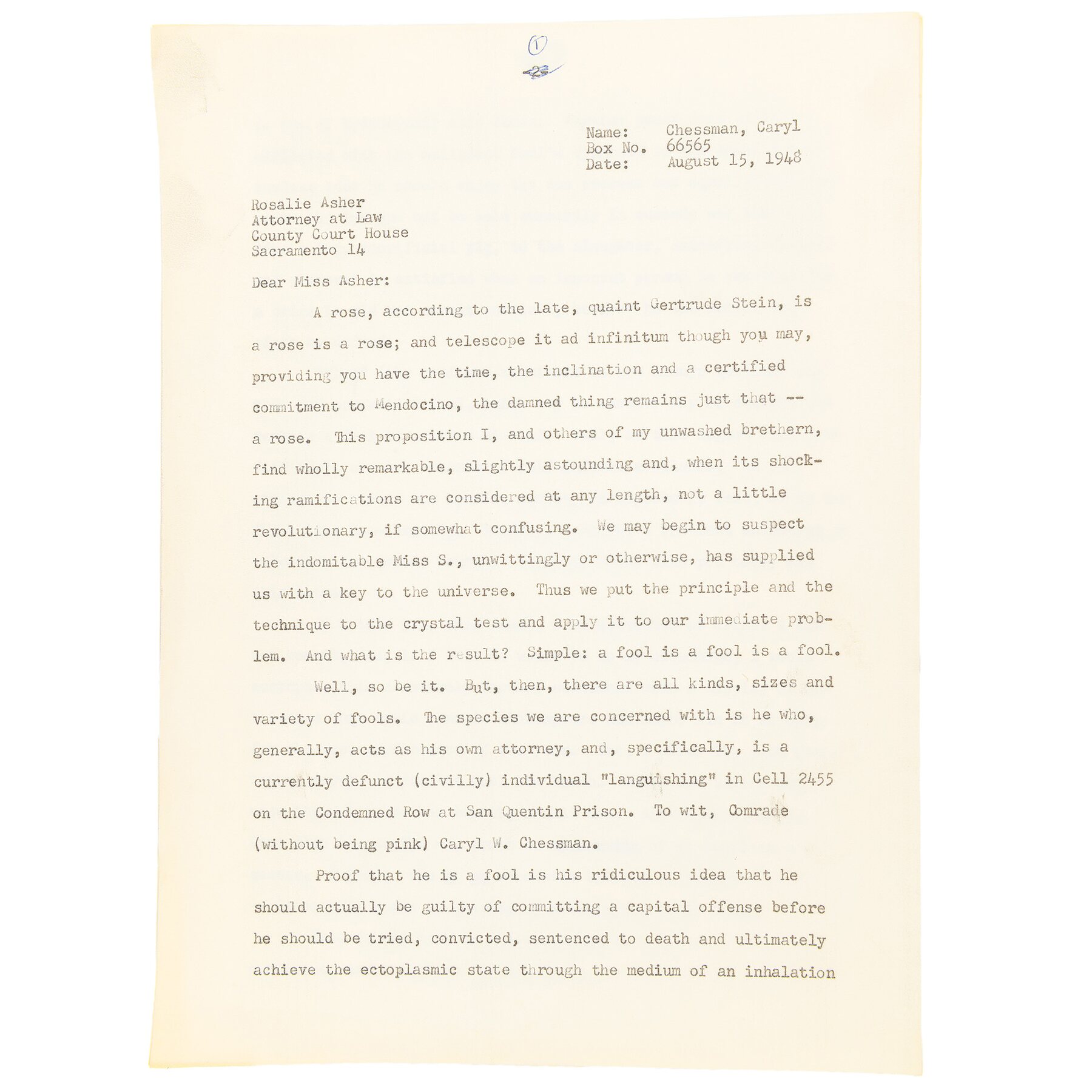
On August 15, 1948, prisoner 66565 typed a letter to “Rosalie Asher, Attorney at Law, County Court House, Sacramento.” It opens with Gertrude Stein and a rose, and turns to the man writing it:
“The species we are concerned with is he who, generally, acts as his own attorney, and, specifically, is a currently defunct (civilly) individual ‘languishing’ in Cell 2455 on the Condemned Row at San Quentin Prison.”
The archive
Manuscripts. Briefs. Letters from San Quentin.
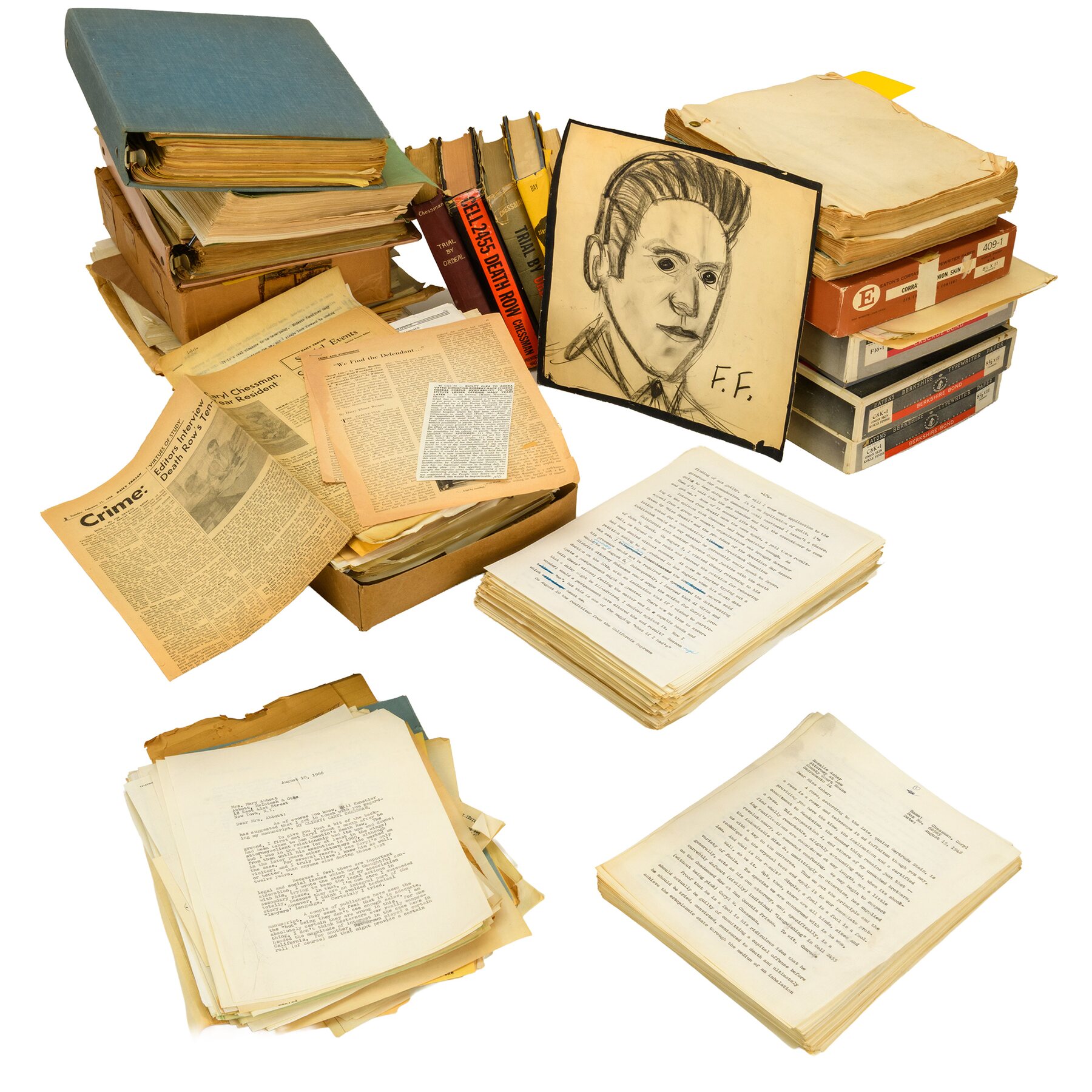
About two and a half linear feet of the defense’s working files, 1948 to 1963: a 263-page manuscript of The Kid Was a Killer and three-volume carbons of Cell 2455, Death Row and Trial by Ordeal; the California Supreme Court briefs Chessman prepared himself; material on the transcript fight; Asher’s correspondence with San Quentin; notebooks, radio and television scripts, photographs, and the paper trail of the clemency campaign. Twelve of the pieces, lettered as exhibits:
-
Inscribed flyleaf
In Chessman’s hand:
For Rosalie Sue Asher, a friend and the keeper of two keys.
-
Chessman to Asher, August 15, 1948
Typed letter from prisoner 66565 to
Rosalie Asher, Attorney at Law, County Court House, Sacramento.
-
Asher to the warden, 1959
August 20, 1959, to Warden Fred R. Dickson, San Quentin,
Re: Chessman, #66565,
sending the carbon of The Kid Was a Killer for revision. Signed. -
Typescript title page
Cell 2455, Death Row:
A New Kind of Story of a Criminal — and Crime.
-
Cell 2455, Death Row
The 1954 book,
a condemned man’s own story,
in its dust jacket. -
Trial by Ordeal
Chessman’s second book, 1955, in its dust jacket.
-
Appellant’s opening brief
Supreme Court of California, The People v. Caryl Chessman, filed by the appellant
in propria persona.
-
Working notes
A ring binder of handwritten notes.
-
Daily Trojan, 1958
February 11, 1958:
Editors Interview Caryl Chessman, Death Row’s Ten-Year Resident.
-
forum, 1979
California Attorneys for Criminal Justice, November–December 1979, with Rosalie S. Asher on the cover.
-
Portrait, signed “F.F.”
A charcoal portrait of Chessman.
-
Envelope
Re: Chessman, Caryl, #66565-B. Condemned 5-2-60.
Live Luxury Asset Auction · Books & Manuscripts
Rosalie S. Asher Archive of Caryl Chessman, America’s Most Famous Death Row Case, with Original Manuscripts, 1948–1963
Estimate $1,000 – 2,500
- Sale
- Thursday, October 29, 2026, 4 PM to close Pacific
- Room
- The Sutter Club, Sacramento, and live online
- Preview
- Wednesday, October 28, 1 – 4 PM; Thursday, October 29, 10 AM – 2 PM, 300 20th Street, Sacramento, CA 95811
Read the full catalog · Ask about this lot · Conditions of sale
Ask a specialist.
Condition reports, additional photographs, provenance, preview appointments, phone and absentee bidding. Send a note and we’ll reply quickly. Include the lot number if you have it.
Notes & sources
Facts on this page are drawn from Time, “The Chessman Affair” (1960); Chessman v. Teets, 354 U.S. 156 (1957); “Caryl Chessman Trial: 1948” (Encyclopedia.com); Berkeley Law on George T. Davis; and the documents in the archive itself. Quotations from the archive are transcribed from the lot photographs.
In the film: Chessman’s 1953 prison photograph, California Department of Corrections (public domain), and a brief excerpt from Cell 2455, Death Row (Columbia Pictures, 1955). Archive photography by Witherell’s.